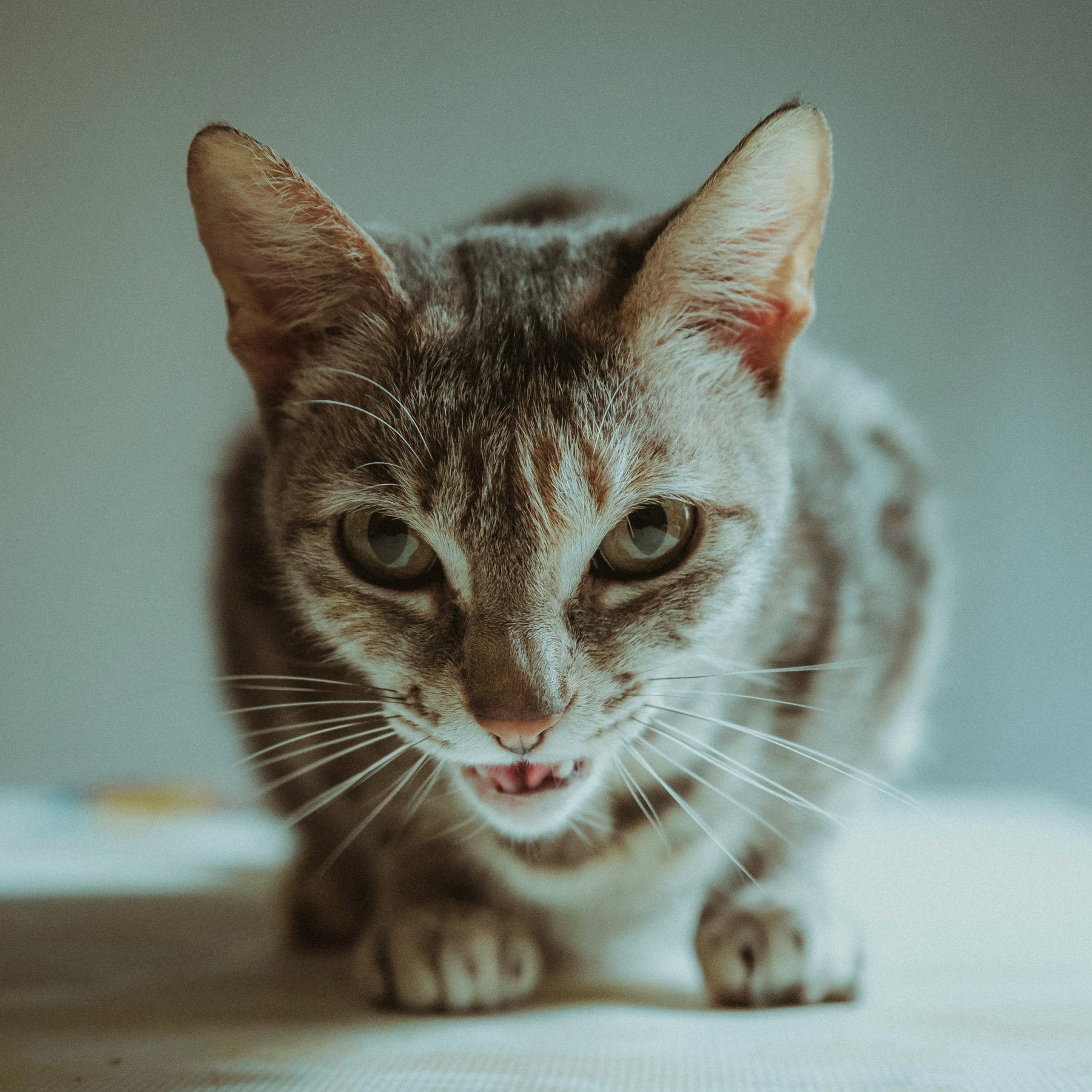
An anxious cat rarely looks scared
Most anxious cats don't tremble or cry. They go quiet, spend more time under the bed, stop playing, and start doing small things that look like bad habits: grooming one patch of fur until it thins, peeing next to the box instead of in it, hissing at a cat they've lived with for years. Owners tend to notice the habit first and only later connect it to something that changed in the house a few weeks earlier.
That delay matters, because a cat that feels unsafe for weeks is not only unhappy. Long-running stress is linked to real illness in cats, most clearly to feline idiopathic cystitis, a painful bladder inflammation with no infection behind it.
Key takeaways
- The common signs are behavior changes, not fear displays: hiding, over-grooming, eating less, litter box accidents, sudden aggression.
- Most of what helped owners was about the home, not about the cat: places to hide, places to climb, and enough food bowls, water and litter boxes that no cat has to compete for them.
- A predictable daily routine calmed cats more reliably than any product.
- Pheromone diffusers help some cats a little. They work best alongside changes to the home, not instead of them.
- A new or sudden fear in an adult cat is a reason to rule out pain first.
Signs of anxiety owners actually noticed
The signs split into two groups, and owners usually see the second group long before the first.
In the moment
A cat that is frightened in the moment freezes or crouches low with its body tight, ears flattened or turned sideways, pupils wide. The tail wraps close to the body or twitches at the tip. Some cats hiss or swat when cornered. These moments are easy to recognize and usually pass once the trigger is gone, whether that's a visitor, a vacuum cleaner or a thunderstorm.
Over weeks
Chronic anxiety looks like a slow change in routine. Owners described cats that:
- hid more, often in one spot, and came out only at night;
- groomed the belly or inner thighs bald, sometimes out of sight, so the first sign was the thin fur, not the licking;
- ate less or ate only when the house was quiet;
- stopped using the litter box, or used it and then bolted out;
- startled at small sounds they used to ignore;
- stopped playing with toys they had chased for years.
If the change in the litter box is the main sign, the article on why a cat stops using the litter box covers that side in more detail, including the urinary symptoms that need a vet the same day.
What usually sets it off
Most cases owners described traced back to a change the cat had no control over: a move, a renovation, a new baby, a new work schedule, a neighbor's cat appearing at the window. The most common single trigger, though, was other cats. International Cat Care notes that a large share of a cat's stress comes from living with other cats, mostly through competition for food, litter boxes and resting spots, and often without any visible fighting. One cat quietly blocking a hallway is enough.
A new cat in the house is the obvious version of this. If that's where the anxiety started, a slower introduction between the two cats often does more than anything in this article.
What actually helped
A hiding place the cat chose
Owners who tried to coax a hiding cat out made it worse. What helped was the opposite: giving the cat a hiding spot it could use without being followed. A cardboard box on its side in a quiet room, a covered bed, or a cleared shelf in a closet all worked. The point is that the cat decides when to come out.
Somewhere high
Cats feel safer when they can watch the room from above. A cat tree near a window, or a cleared top of a bookcase, gave nervous cats a place to be present in the room without being on the floor with people, dogs or other cats. In multi-cat homes this often reduced standoffs too, because the anxious cat no longer had to pass the other one to find a safe spot.
Enough of everything, in different places
This was the change owners of multi-cat homes mentioned most. One food station, one water bowl and one litter box per cat, plus one extra, each in a different part of the home. The "different part" is what makes it work: two boxes side by side in the same corner count as one location, and a cat that feels watched on the way there will still avoid it.
The same routine every day
Feeding at the same times, play at the same time in the evening, the same order of things before bed. Owners who worked shifts or traveled noticed their cats settled down once the cat's own schedule stayed fixed even when theirs didn't, for example with an automatic feeder keeping meal times the same.
Short play sessions that end with food
A short session with a wand toy, finished with a meal or a few treats, helped cats that had stopped playing. Owners described it as giving the cat something to do with the tension. It also gave shy cats a way to be near their owner without being handled.
Letting the cat start the contact
Picking up an anxious cat to comfort it usually backfired. Owners had more luck sitting on the floor and letting the cat approach, then stopping petting before the cat wanted to leave. Punishment for hiding, hissing or accidents made things worse every time, which matches VCA's guidance not to scold a frightened pet.
Do pheromone diffusers help?
They help some cats, modestly. Synthetic facial pheromone diffusers are meant to copy the scent a cat leaves when it rubs its cheeks on furniture, the "this place is safe" mark. A systematic review in Veterinary Evidence found that most of the controlled studies it looked at showed some reduction in short-term stress signs, but the studies were small and the effect varied from cat to cat.
Owners reported the same pattern. Some saw a calmer cat within a couple of weeks, others saw nothing. The ones who were happy with the result had usually changed the home at the same time, adding a hiding spot or another litter box, so the diffuser was one change among several, not the fix on its own.
What did not help
Calming treats and sprays bought on their own, with nothing else changed, did little for most owners. Reassuring a hiding cat by reaching in to pet it tended to push it further back. Moving the cat's things around to "freshen up" its space during a stressful period added one more change to the list.
When anxiety means a vet visit
A new fear, or a sudden jump in an old one, in an adult or senior cat should be checked by a vet before it's treated as behavior. VCA notes that underlying illness or pain can cause or add to fear and anxiety, and that an exam and lab work can find it. Arthritis, dental pain, thyroid problems and bladder pain all show up as hiding, irritability or litter box changes.
See a vet the same day if the cat strains in the litter box and passes little or no urine, stops eating for more than a day, or grooms until the skin is raw. If the anxiety is severe and the trigger can't be removed, vets can prescribe anti-anxiety medication. That is a normal step, not a last resort.
What to do next
Pick one change from the list above that fits your home, usually a hiding spot or an extra litter box in a different room, and give it two weeks before judging it. If the signs appeared suddenly or come with changes in eating or peeing, book the vet visit first.