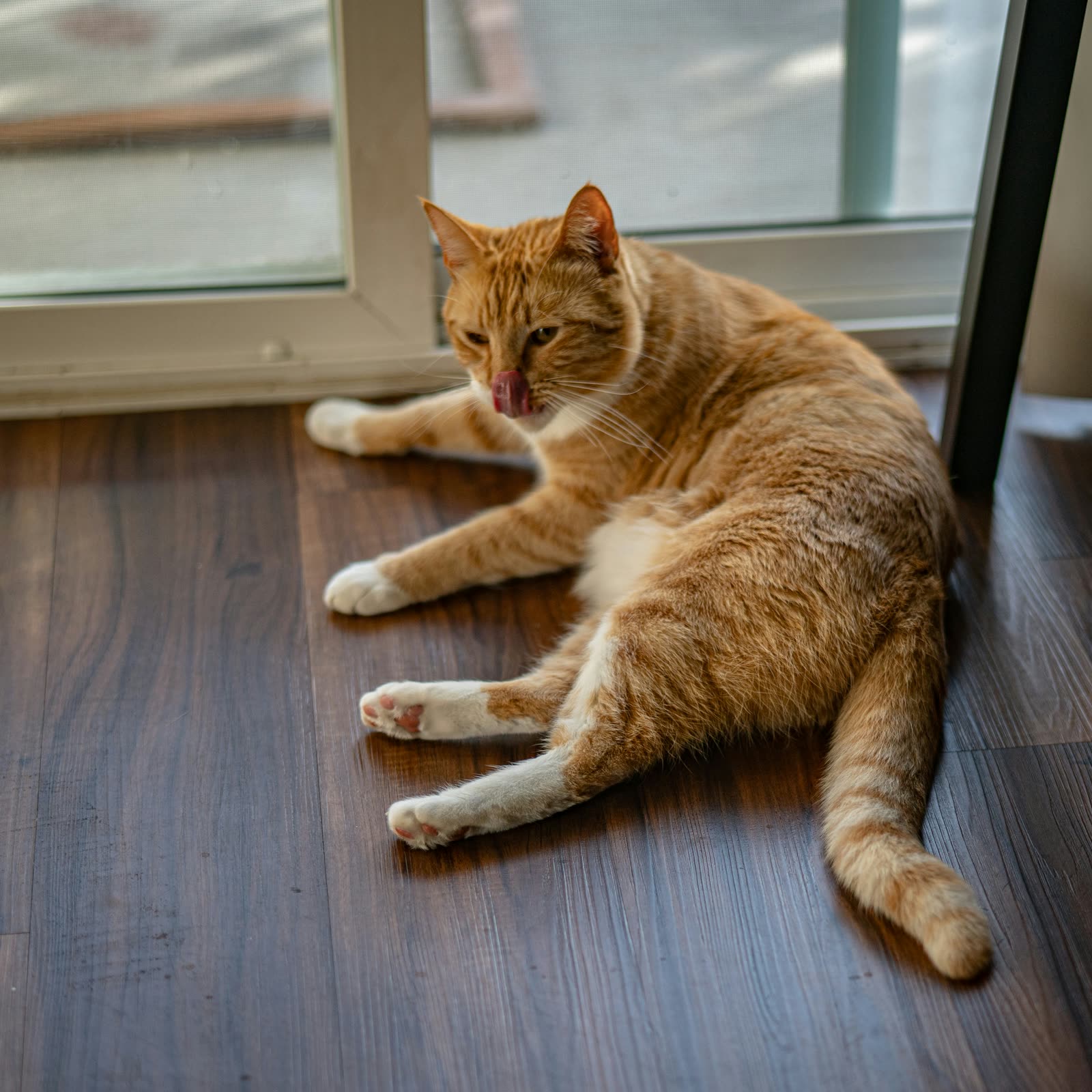
Vomiting once is not the same as vomiting every week
A cat that throws up a hairball, eats normally an hour later, and acts like nothing happened is usually fine. According to the Cornell Feline Health Center, it's not uncommon for a cat to bring up a hairball once every week or two without any lasting problem, and even a healthy cat vomits now and then. What changes the picture is frequency, not any single episode. Cornell's own guidance is that vomiting more than once a week, or a hairball more than once a month, is worth a call to the vet even if the cat seems otherwise normal between episodes.
It also helps to know what came up. VCA Animal Hospitals draws the line between vomiting, which involves abdominal effort and can happen well after a meal, and regurgitation, which happens fast, right after eating, and brings up food that never made it past the esophagus. A cat that vomits undigested kibble within a minute or two of finishing a meal is usually describing an eating problem, not a stomach one, and the fix is often about how the cat eats, not what it eats.
What owners on OnlyMeows found
- A slow feeder or a puzzle bowl was the single most reported fix for cats that ate fast and brought it back up minutes later. Spreading the kibble out so the cat has to work for each piece stops the stomach from filling all at once.
- Splitting one large meal into three or four smaller ones helped in households where the cat wasn't eating too fast so much as eating too much in one sitting, especially cats fed once a day who were visibly starving by mealtime.
- Wetting dry food with a little warm water before serving worked for owners who didn't want to switch foods entirely. The kibble softens and expands before it reaches the stomach instead of after.
- Brushing more during shedding season cut down on hairball vomiting specifically, as owners expected, though it did nothing for cats vomiting for other reasons.
- Waiting at least 30 minutes after vigorous play before feeding helped a few owners whose cats vomited after running around right after a meal, not after eating itself.
Ours would inhale his food in under a minute and it would come right back up, still basically whole. Put half his portion on a plate spread thin instead of a bowl and that was the end of it.
Why dry food seems to trigger it more
Several owners on OnlyMeows specifically connected the vomiting to dry food, and the mechanism explains why. Kibble is dense and absorbs stomach fluid fast, so it swells after it's eaten. A cat that eats a full bowl of dry food quickly can end up with a stomach that expands faster than it's built to handle, which triggers vomiting as a reflex rather than a sign of illness. Vets sometimes call this pattern "scarf and barf," and it shows up more with dry food than wet food because kibble takes up more room once it's inside the cat than it did in the bowl. The fixes owners found for this were the same ones already listed: a slow feeder, smaller portions, or wetting the food before it's served, not a different brand or flavor.
What did not help
Switching brands repeatedly to chase the problem tended to make it harder to tell what was actually going on, since each new food change is itself a possible trigger for a day or two of vomiting. A few owners also mentioned assuming the vomiting was hairballs by default and not tracking how often it happened, which meant a pattern that had crossed into vet territory went unnoticed for weeks.
When it means a vet visit
Cornell's threshold is straightforward: more than once a week, or more than once a month for hairballs specifically, is not normal even if the cat acts fine in between. That threshold moves up sharply if vomiting shows up alongside lethargy, a drop in appetite, blood in the vomit, diarrhea, or a noticeable change in how much the cat is drinking or urinating. VCA notes that cats with ongoing vomiting sometimes need fluid therapy for dehydration on top of treating whatever's causing it, which is one reason not to wait out a pattern that's already been going on for weeks.