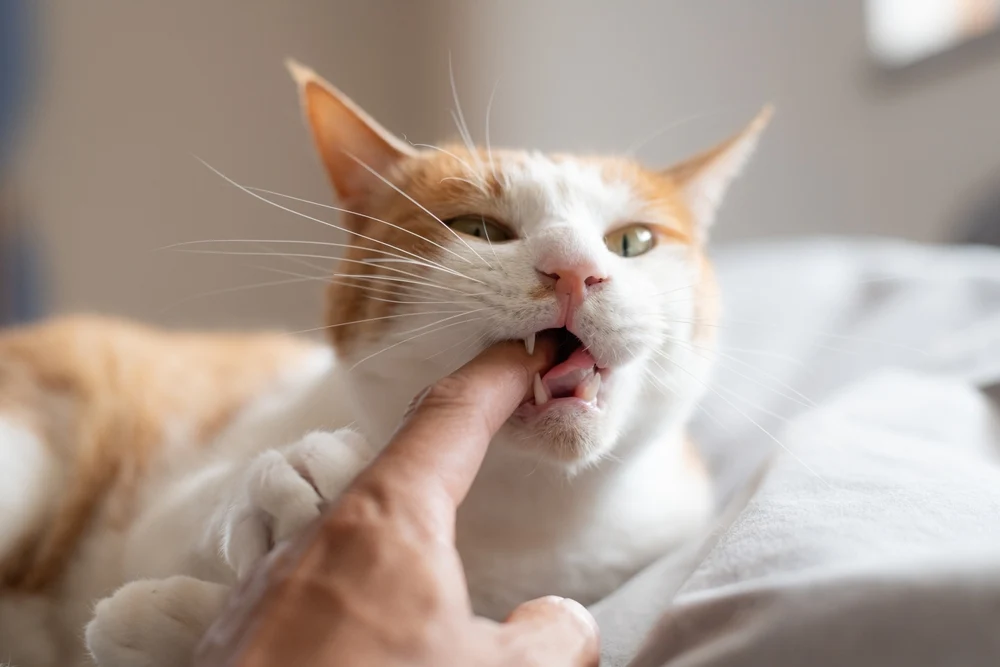
Two different bites hiding under one question
"Why does my cat lick me, then bite me" covers two behaviors that stop feeling the same once you know what to look for. The first is a soft nibble mid-lick, the kind of thing a cat does to another cat, or to a kitten, during grooming. It is affection, not a complaint. The second is a harder bite that follows a stretch of petting the cat has had enough of, known as petting-induced aggression or overstimulation. Same search term, opposite meanings, and telling them apart changes what you do next: nothing, in the first case, and less petting sooner, in the second.
What owners on OnlyMeows found
- The warning comes before the bite, not with it. A flicking tail, a ripple of skin along the back, ears turning back or flattening, dilating pupils, and a quick head-turn toward the petting hand are the standard pre-bite signals vets and shelters use to spot overstimulation. Owners who stopped at the first one instead of the last one avoided the bite most of the time.
- Where you pet matters more than how long. Cheeks, chin and the base of the ears got tolerated far longer than the lower back, belly or the base of the tail, where a lot of cats' patience ran out fast regardless of mood.
- Shorter, more frequent petting beat longer sessions. Several owners found that stopping while the cat still looked relaxed, then letting it come back for more later, worked better than one long session that reliably ended in a nip.
- Purring is not a green light. A few owners assumed a purring cat was fine to keep petting; some of the hardest bites came from cats that were purring right up until the moment they weren't.
He'd start purring, then this specific back-leg twitch would show up two seconds before the bite. Once I learned to stop at the twitch instead of the purr, we didn't have a single bite in weeks.
When it could be pain, not overstimulation
A cat that suddenly bites at a touch it used to tolerate, especially an older cat or one where the reaction is limited to one spot on the body, may be reacting to pain rather than sensory overload. Feline hyperesthesia syndrome, arthritis and skin infections can all make ordinary touch feel unpleasant, and the trigger point is often more specific and consistent than the whole-body build-up of overstimulation. VCA Animal Hospitals covers both patterns and how vets tell them apart.
When to see a vet
If the change is sudden, limited to touching one area, or comes with flinching, limping or reduced grooming, treat it as a pain question before a behavior one. Overstimulation is common and manageable with fewer, shorter petting sessions; a new and localized reaction is not something to train around.