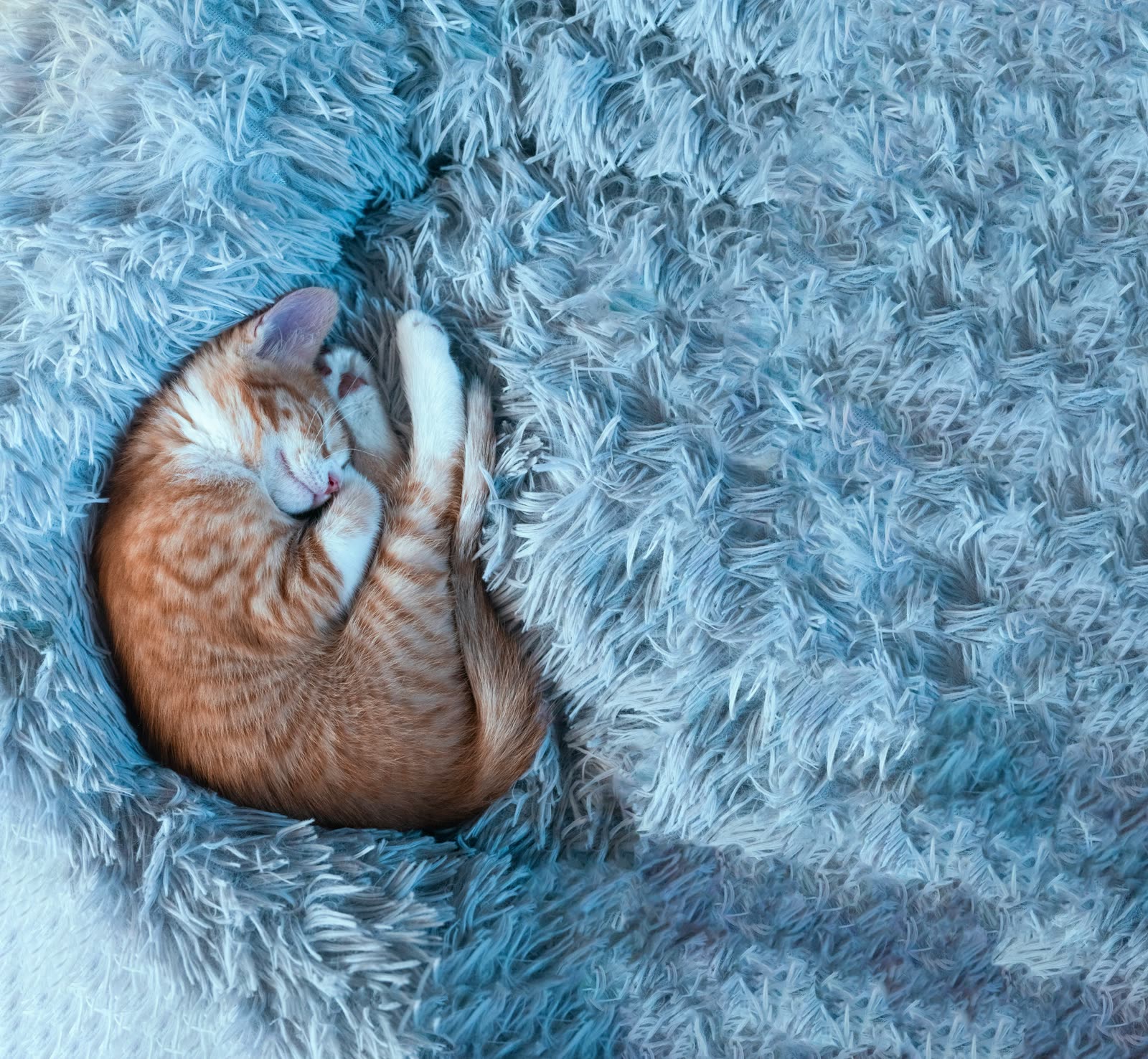
It tracks temperature more than it tracks mood
A cat's preferred resting temperature runs well above ours. Research cited by the American Veterinary Society of Animal Behavior puts a cat's thermoneutral zone around 86–101°F (30–38°C), the range where it doesn't need to burn energy warming up or cooling down. Most houses sit far below that. A cat's sleeping position is largely it solving that problem: curling tight to hold in heat, sprawling flat to lose it, picking a lap or a sunbeam because it's the warmest surface in the room.
Trust matters too, but it shows up as a smaller shift than owners expect. The same cat curls in a tight ball most nights and only sprawls loose, belly up, on the handful of nights it feels safest. That's the signal worth watching: not which position a cat prefers overall, but when it switches from its usual one.
What owners on OnlyMeows found
- The tight curl is the default, and that's not a bad sign. It's what a cat outdoors does to save body heat and protect its belly, and most indoor cats keep doing it out of habit even in a warm house. A cat that sleeps curled every night isn't anxious; it's just a cat.
- Belly up shows up more with familiar people in the room, not alone. Several owners noticed their cat never sleeps exposed like that on an empty bed, only on the couch mid-afternoon with someone nearby. It reads as comfort, not an invitation, several people learned that the hard way.
- The position changed with the room, not the cat. Move a bed away from a draft or add a heated pad, and a cat that always slept tucked into a loaf started sprawling flat within days. Nobody had to train that; the spot did the work.
- A sudden switch to sleeping somewhere unusual, like the bathroom floor or right on the vent, tracked with warmer or colder weather almost every time. It stopped again once the season did.
Mine slept in a tight ball on the radiator cover every winter and completely flat on the tile by the door every summer. Same cat, same house, different math depending on the month.
When a new position is worth a vet visit
A cat that suddenly hunches instead of curling, tucks its abdomen, or picks tense, guarded positions it never used before can be signaling pain rather than comfort-seeking. The American Animal Hospital Association lists changes in sleep position and location, alongside reduced grooming and more hiding, as early behavioral signs of pain in cats, since cats mask injury by instinct. If the new position comes with less interest in food, less grooming, or more hiding during the day, that combination is worth a call to the vet rather than a wait-and-see.