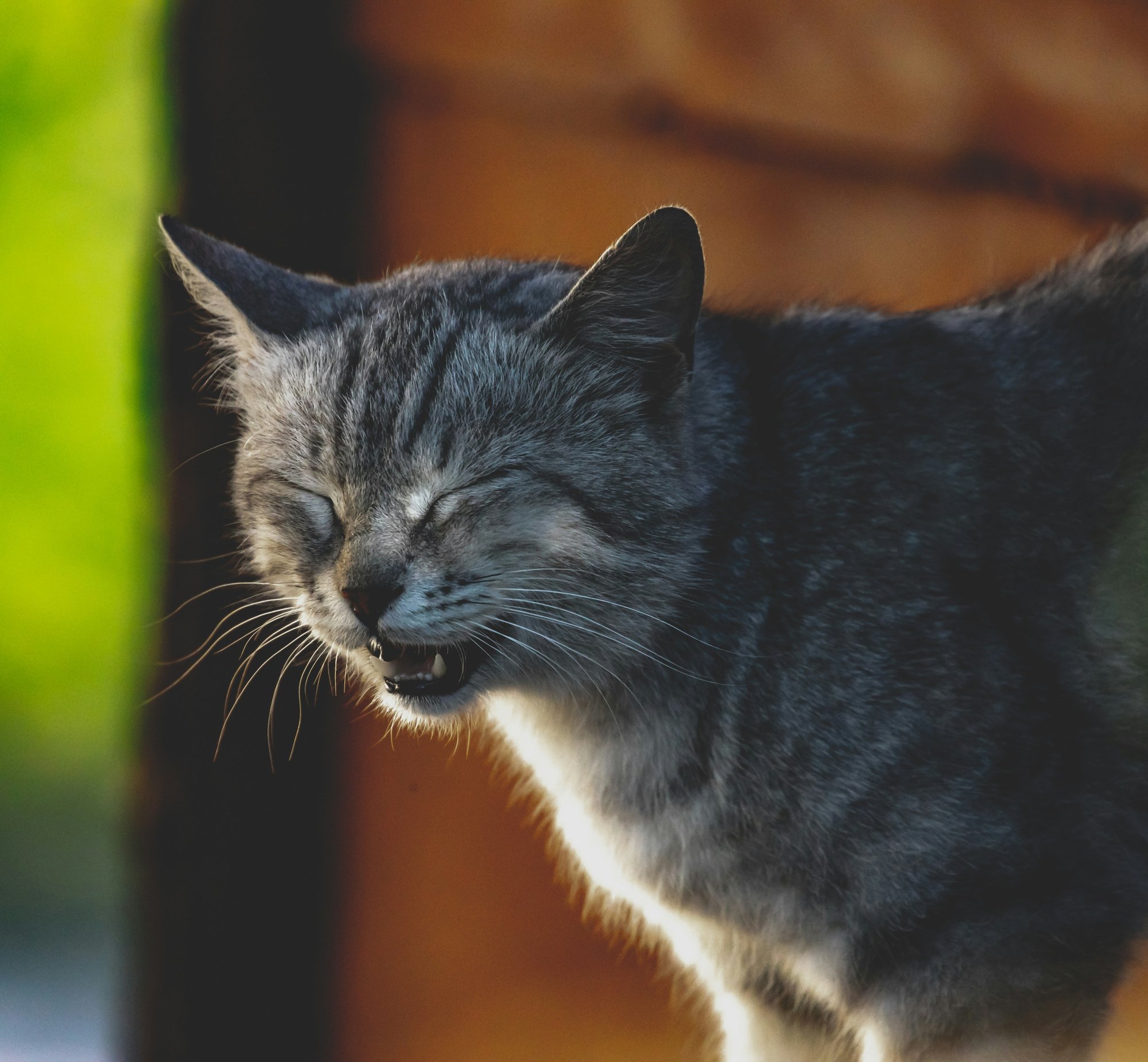
A sneeze now and then is not a pattern
A cat that sneezes a couple of times after sniffing the carpet and then goes back to eating, playing and grooming is almost always fine. Cats sneeze for the same reason people do: something tickled the inside of the nose and the body pushed it out. What's worth paying attention to is a change, not a single sneeze. Sneezing that comes in fits several times a day, keeps going for more than a few days, or brings discharge with it is a different situation, even if the cat is still acting normally.
Key takeaways:
- Occasional sneezing with no other signs usually needs nothing more than watching for a few days.
- A run of sneezing with clear discharge and a normal appetite is most often a mild viral flare or something irritating the nose at home.
- Thick yellow or green discharge, a cat that stops eating, labored breathing, or sneezing that lasts for weeks all mean a vet visit.
Why does my cat keep sneezing?
Most repeated sneezing in an otherwise healthy cat comes down to one of two things: something in the air at home, or a virus the cat has carried for years.
Something at home is irritating the nose
Dust and scent are the usual suspects. Clay litter that puffs up a cloud when the cat digs, a new scented litter, air fresheners, plug-in diffusers, candles, cleaning sprays and cigarette smoke all end up at nose level for a cat. A useful clue is timing: sneezing right after the litter box, right after you clean, or only in one room points to the environment rather than an infection.
An old virus is flaring up
Feline herpesvirus is the cause most owners haven't heard of, and it's extremely common. According to the Cornell Feline Health Center, up to 97% of cats are exposed to it during their lives, up to 80% of exposed cats stay infected for life, and up to 45% of those periodically shed the virus again, usually when they're stressed. That's why a cat that has lived indoors alone for years can suddenly start sneezing after a move, a new pet, a boarding stay or a house full of guests. The cat didn't catch something new. The virus it already had woke up.
These flares tend to look mild: sneezing fits, a runny nose with clear discharge, sometimes watery or squinty eyes, and a cat that is otherwise eating and behaving normally. If you've recently made changes that stress your cat, it's worth reading about the signs of cat anxiety and what reduced it, because lowering stress is also what makes flares less frequent.
What to change at home first
If the cat is eating, drinking and acting like itself, a few days of watching combined with removing likely irritants is a reasonable start.
- Switch to a low-dust, unscented litter and see whether sneezing after the litter box stops. Change one thing at a time so you can tell what helped.
- Put away air fresheners, diffusers and scented candles for a week or two, and avoid spraying cleaners near where the cat sleeps or eats.
- Wash the cat's bedding and vacuum its favorite spots, since dust and dander collect exactly where cats spend the most time.
- Use steam if the nose sounds blocked. VCA Animal Hospitals suggests bringing a congested cat into a steamy bathroom for 10 to 15 minutes several times a day, and gently wiping discharge from the nose and eyes with a damp tissue.
- Offer a strong-smelling wet food. Cats rely heavily on smell to want to eat, and a blocked nose can make food seem uninteresting. VCA recommends a highly palatable canned food for this reason. If the cat starts skipping meals anyway, the advice in what to do when a cat stops eating applies here too.
- Keep a short log: how many sneezing fits a day, what the discharge looks like, and whether appetite changes. It makes a vet visit faster if you end up needing one.
How long is too long
An uncomplicated upper respiratory infection typically lasts 7 to 14 days, and signs can linger for up to 21 days, according to VCA. A cat that is clearly improving over that window is on track. A cat that is still sneezing several weeks later, or whose sneezing keeps coming back, needs a vet to look for other causes.
International Cat Care lists what vets check for when sneezing becomes chronic: grass blades or seeds stuck in the nose, dental disease affecting the tooth roots near the nasal cavity, inflammatory polyps, fungal infections and, less often, tumors. None of these clear up with better litter, which is why ongoing sneezing deserves an exam rather than more waiting.
When sneezing means a vet visit
Book a vet visit if any of these show up alongside the sneezing:
- discharge from the nose or eyes that turns thick, yellow or green, or has blood in it;
- the cat stops eating, or eats much less, for more than a day;
- breathing through an open mouth, or breathing that looks like effort;
- lethargy, hiding or a cat that isn't acting like itself;
- squinting or a cloudy eye;
- sneezing that is still going after two to three weeks, or keeps coming back.
Kittens, senior cats and cats with other health problems should be seen sooner, since dehydration and not eating hit them faster.