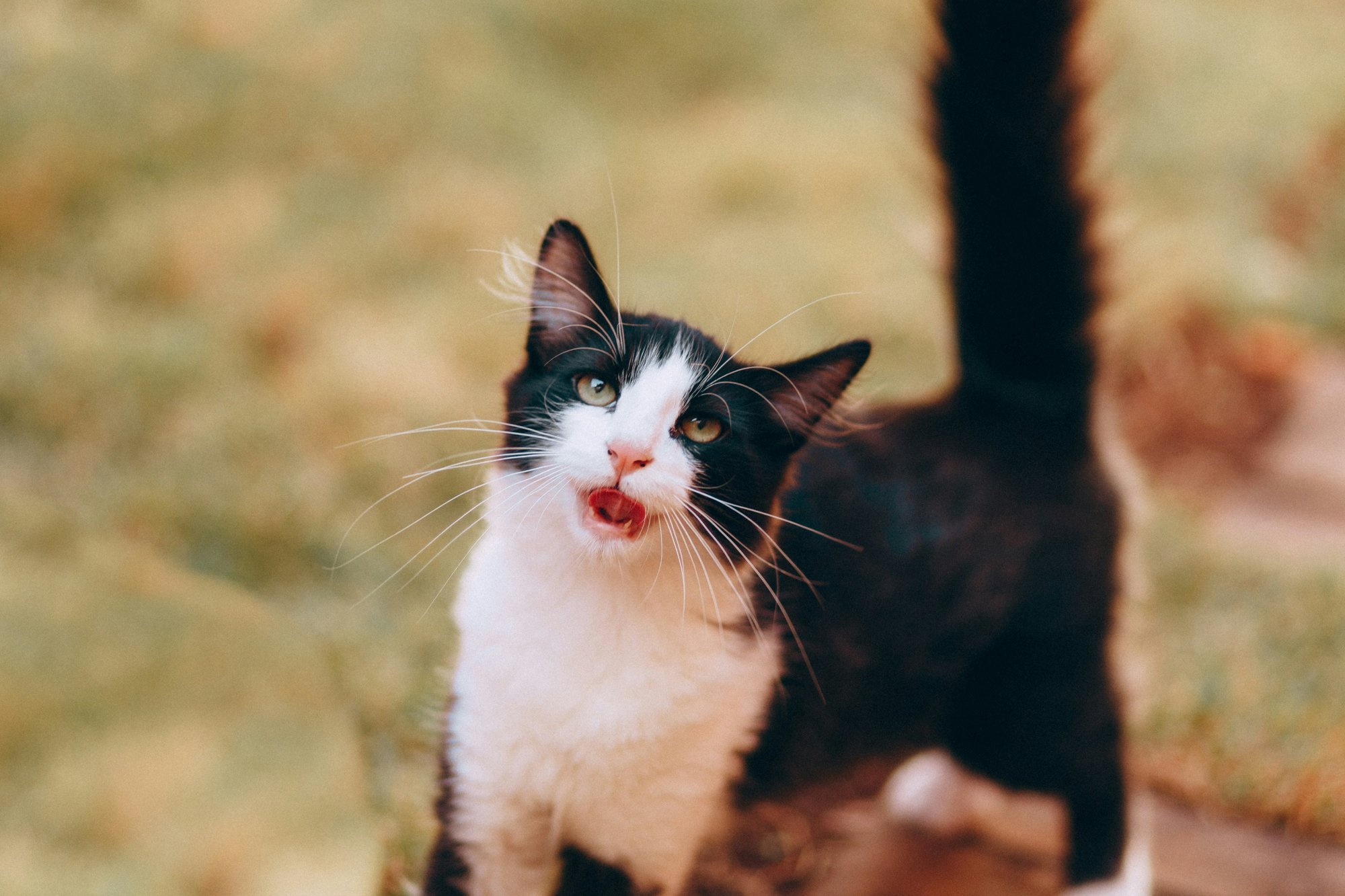
Your cat is meowing at you, not at the room
Adult cats rarely meow at each other. According to the ASPCA, kittens meow to their mother, but grown cats keep the meow mostly for people. That changes how to think about a cat that won't stop: the meow is a message aimed at you, and it usually keeps going because at some point it worked.
A cat that meows a lot is rarely being difficult for no reason. It has found out that a certain sound, at a certain time, produces food, an open door or a person who gets up from the sofa. The fix is less about silencing the cat and more about changing what the meowing gets it.
Key takeaways:
- Most constant meowing is a learned request for food, attention or a door.
- Answering the meow, even to tell the cat off, keeps it going.
- Rewarding quiet moments and making food arrive on a schedule helped owners the most.
- A cat that suddenly meows much more than it used to, especially an older one, needs a vet check before any training.
Why does my cat keep meowing?
Before changing anything, it helps to notice when the meowing happens. The timing usually points straight at the reason.
Food
Meowing that peaks before meals, near the kitchen or whenever someone opens the fridge is about food. If the cat has ever been fed to make it stop, it has learned that meowing moves dinner forward.
Attention and boredom
A cat that meows when you sit down to work, get on a call or pick up your phone is asking for company. The ASPCA notes that cats left alone for long stretches each day are more likely to meow for attention, and indoor cats with little to do in the evening often talk the most.
Doors
Closed doors are a classic trigger. Many cats don't want to go through the door so much as have it open, and they meow on both sides of it.
Breed and personality
Some cats are simply chattier. Siamese and related breeds are known for frequent, loud meowing, and a talkative cat may just be greeting you or narrating its day. That kind of meowing is short, friendly and doesn't escalate.
Heat
An unspayed female in heat yowls loudly and repeatedly, often for days, and intact males call too. Spaying and neutering stop this kind of vocalizing.
What owners on OnlyMeows found
- Answering only the quiet cat made the biggest difference. Owners waited for a pause in the meowing, even a few seconds, and gave attention then. The ASPCA recommends the same thing: attention for quiet, nothing for noise.
- Feeding on a fixed schedule stopped most of the food meowing. Once meals arrived at the same times no matter how much noise the cat made, the pre-meal protests got shorter. An automatic feeder helped the most, because the food no longer came from the person being meowed at.
- A real play session in the evening, ten or fifteen minutes with a wand toy until the cat was properly tired, reduced evening talking for young and bored cats more than any gadget.
- Giving the cat something to do while alone, like a puzzle feeder, a window perch or a second play session before leaving, helped cats that greeted their owners with a long complaint.
- Deciding on doors worked better than going back and forth. Owners either left the door open or kept it closed every time, and the door meowing faded once the cat learned it never changed the outcome.
Expect the first week to be louder. When meowing stops working, many cats try harder before they give up. Owners who gave in during that stretch found they'd taught the cat to meow longer, not less.
What didn't help
Shouting, spraying water and pushing the cat away all count as attention, and owners who tried them usually got a cat that came back just as loud. The ASPCA advises against scolding or punishing a cat for meowing, since it creates fear without changing the habit. Ignoring every meow isn't the answer either: a cat may be telling you the water bowl is empty or the litter box is dirty, so check the basics before you decide it's a demand.
Meowing at night
Night meowing mostly follows the same rules as daytime meowing, with the extra problem that tired people give in faster. We covered this separately in what actually reduced the 5am wake-ups: consistency from everyone in the house, a timed feeder and play before bed did most of the work.
The exception is an older cat that starts yowling at night when it never used to, sometimes while wandering or seeming lost. That usually isn't a habit problem, and it belongs in the next section.
When meowing means a vet visit
A change in how much a cat meows matters more than the amount. Book a vet visit if:
- a cat that used to be quiet starts meowing much more, without a clear change at home;
- an older cat is meowing more along with eating more, losing weight or drinking more, which can point to hyperthyroidism or kidney disease, both of which the ASPCA lists as common causes of extra meowing in older cats;
- a senior cat yowls at night, seems confused or gets stuck in corners, which can be cognitive decline, though a vet will want to rule out thyroid, blood pressure, pain and hearing or vision loss first;
- meowing comes with straining in the litter box, crying while peeing or going outside the box, which can be a urinary blockage and is an emergency in male cats;
- the cat cries when picked up, when jumping or when touched in one spot, which suggests pain.
Cats hide illness well, and more meowing is sometimes the only outward sign. If you're unsure whether the meowing is new or has always been this way, rule out a medical cause first. Training won't quiet a cat that's meowing because it feels unwell.